Full Moon Tonight: May 2026, Blue Micromoon, and Everything You Want to Know
Tags: #Astronomy, #AstroPhotography, #BlueMicromoon, #BlueMoon, #CelestialEvents, #FullMoonTonight, #LunarEvents, #May2026FullMoon, #Micromoon2026, #MoonFacts, #MoonLovers, #MoonPhotography, #MoonWatch, #NightPhotography, #NightSky, #SkyWatchers, #SpaceExploration, #SpaceNews, #Stargazing, #Universe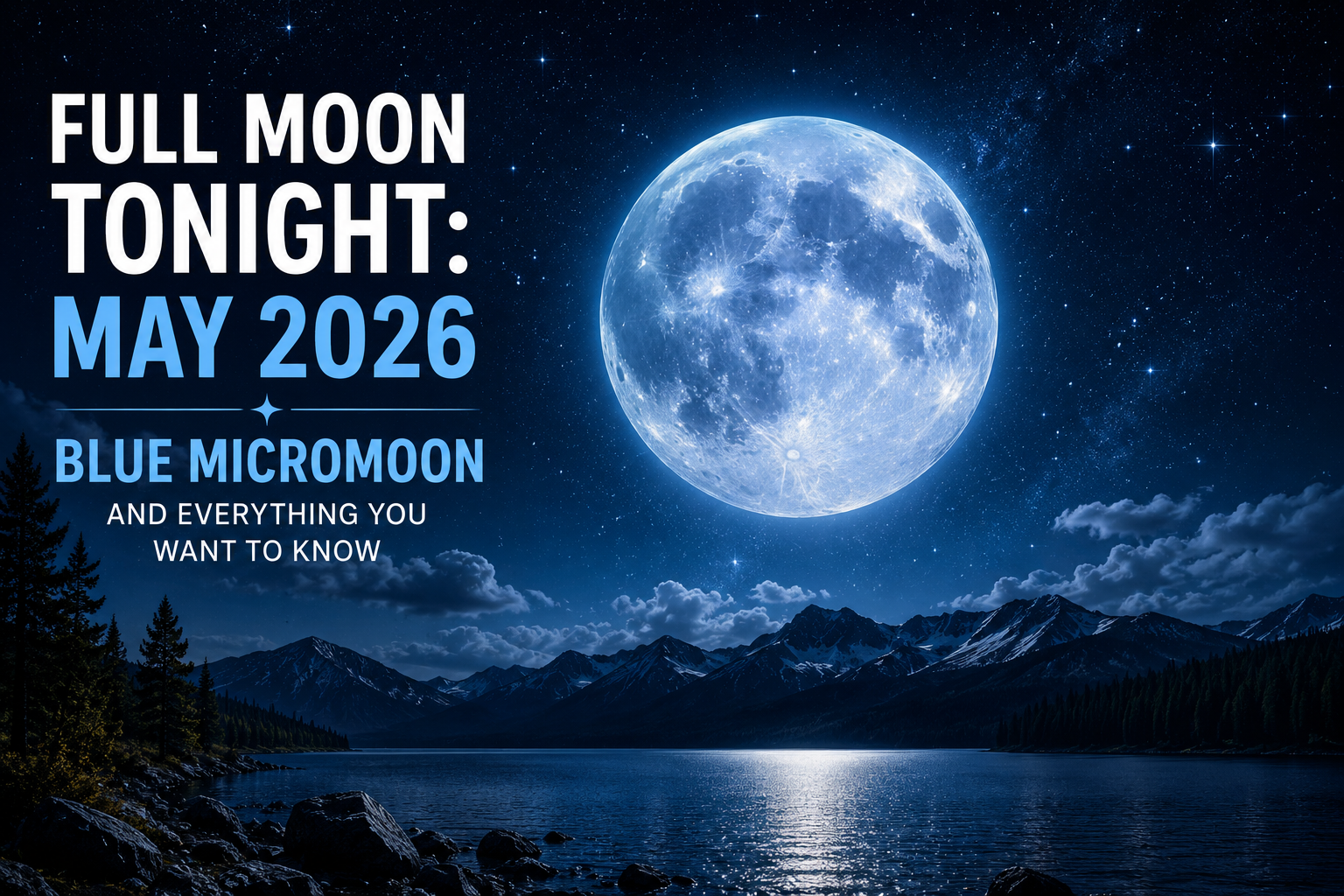
Full Moon Tonight:
Blue Micromoon
Everything you want to know about tonight’s moon, May 2026’s rare Blue Micromoon, and how moon phases work — explained simply.
Is It a Full Moon Tonight?
Yes — right now, in late May 2026, you’re looking at one of the most interesting full moons of the year. The full moon peaks at 8:45 UTC on May 31, 2026. If you live in the Americas, Europe, or Africa, the moon appears fullest during the night of May 30. Those west of the International Date Line — Australia, New Zealand, and Asia — will see their fullest moon on the night of May 31.
So whether you’re asking “is tonight a full moon” or “is there a full moon tonight,” the answer is yes. And this one comes with a special label: the Blue Micromoon.
What Is a Full Moon?
A full moon happens when Earth sits directly between the Sun and the Moon. The entire side of the Moon facing us gleams under sunlight. Thanks to the Moon’s orbit around Earth, the angle of sunlight hitting the lunar surface constantly changes — and that creates the different lunar phases.
🌕 Quick myth-buster: Moon phases are not caused by Earth’s shadow. They’re caused by the changing geometry of the Sun, Earth, and Moon as the Moon orbits us.
Moon Phases Explained
The Moon moves through a gradual cycle every month — not just full and new. There are eight recognized phases in total.
The full cycle takes roughly 29.5 days. If you want to know “when is the next full moon” after any given one, count about 29 and a half days forward.
What Moon Phase Is Tonight?
Today, May 30, 2026, the moon is 13 days old and in the Full Moon phase. It’s 99% illuminated — effectively fully full to the naked eye on both May 30 and May 31.
The May 2026 Full Moon: A Double Feature
May 2026 is unusual because it has two full moons in one calendar month. The second full moon of the month falls on May 31 — known as the Blue Moon — following the Flower Moon that lit up the sky on May 1.
Why Is It Called the Flower Moon?
May’s Flower Moon name comes from the flowers that spring forth across North America in abundance this month. The name has been attributed to Algonquin peoples. Traditional full moon names were originally applied to the entire lunar month, not just a single night.
What Is a Blue Moon?
Despite the name, a Blue Moon has nothing to do with color. A Blue Moon is an informal term for the second full moon in a single calendar month. It happens only every two or three years — because the lunar cycle (29.5 days) doesn’t divide neatly into calendar months.
There is also an older, seasonal definition: a Blue Moon is the third full moon in an astronomical season that has four full moons instead of the usual three. The monthly definition is more widely used today, though it grew from a misreading of the original almanac meaning decades ago.
Will It Actually Look Blue?
No. Blue-colored moons in photographs are made using special camera filters or post-processing software. A truly blue-tinted moon can happen in real life, but only when Earth’s atmosphere contains dust or smoke particles of a very specific size — not because of the calendar.
What Is a Blue Micromoon?
This is where May 2026 gets really interesting. This isn’t just a Blue Moon — it’s also a Micromoon. The Full Moon on May 31, 2026 occurs just before the Moon reaches its apogee (farthest point from Earth) on June 1. When a full moon happens near apogee, it’s called a Micromoon — the opposite of a Supermoon.
📏 This May 30–31 moon sits about 252,360 miles (406,134 km) away — roughly 13,460 miles farther than average. It’s about 7% dimmer than a typical full moon and 25–30% dimmer than a supermoon.
Will It Look Noticeably Smaller?
Probably not. Despite its name, the micromoon is unlikely to appear noticeably smaller to the naked eye. What often makes the Moon appear larger is the well-known “Moon illusion” — an optical effect that makes the Moon look bigger when it’s near the horizon. This Blue Micromoon won’t look tiny. It will still look magnificent rising over the horizon.
How Rare Is a Blue Micromoon?
Very rare. A Blue Moon alone happens every two to three years. Combining that with a micromoon at the same time is much less frequent. This exact combination won’t repeat until December 31, 2028.
How to See the Blue Micromoon Tonight
You don’t need any special equipment. Head to a spot with an unobstructed view of the eastern horizon, away from bright city lights. Check your local weather and dress for the temperature if you plan to stay out a while.
The moon looks essentially full from late May 29 through early May 31, so you have a bit of leeway if clouds roll in one night. Look for it rising in the southeast shortly after sunset, and notice the bright red star nearby — that’s Antares, the heart of the constellation Scorpius.
For photos, tap to focus on the Moon and lower your exposure so it doesn’t blow out. Set a 2–3-second timer and shoot a burst of photos, then pick the sharpest one.
When Is the Next Full Moon After May 2026?
After the Blue Moon on May 31, 2026, the next full moon occurs on June 29, 2026 — the Strawberry Moon. And for Blue Moon fans: the next one will be a seasonal Blue Moon on May 20, 2027, with the next monthly Blue Moon not arriving until December 31, 2028.
Frequently Asked Questions
Quick, honest answers to the most common moon questions