Daily Routine for a Successful and Happy Life
Tags: **SEO Tags (High-Search Keywords):** daily routine for success, best daily schedule, daily habits for happiness, daily motivation routine, daily routine checklist, habits of successful people, healthy daily routine, healthy lifestyle habits, how to stay productive daily, millionaire morning routine, morning routine ideas, personal growth routine, positive lifestyle tips, productivity routine, self improvement routine, simple daily routine, successful life habits, time management routine, work life balance tips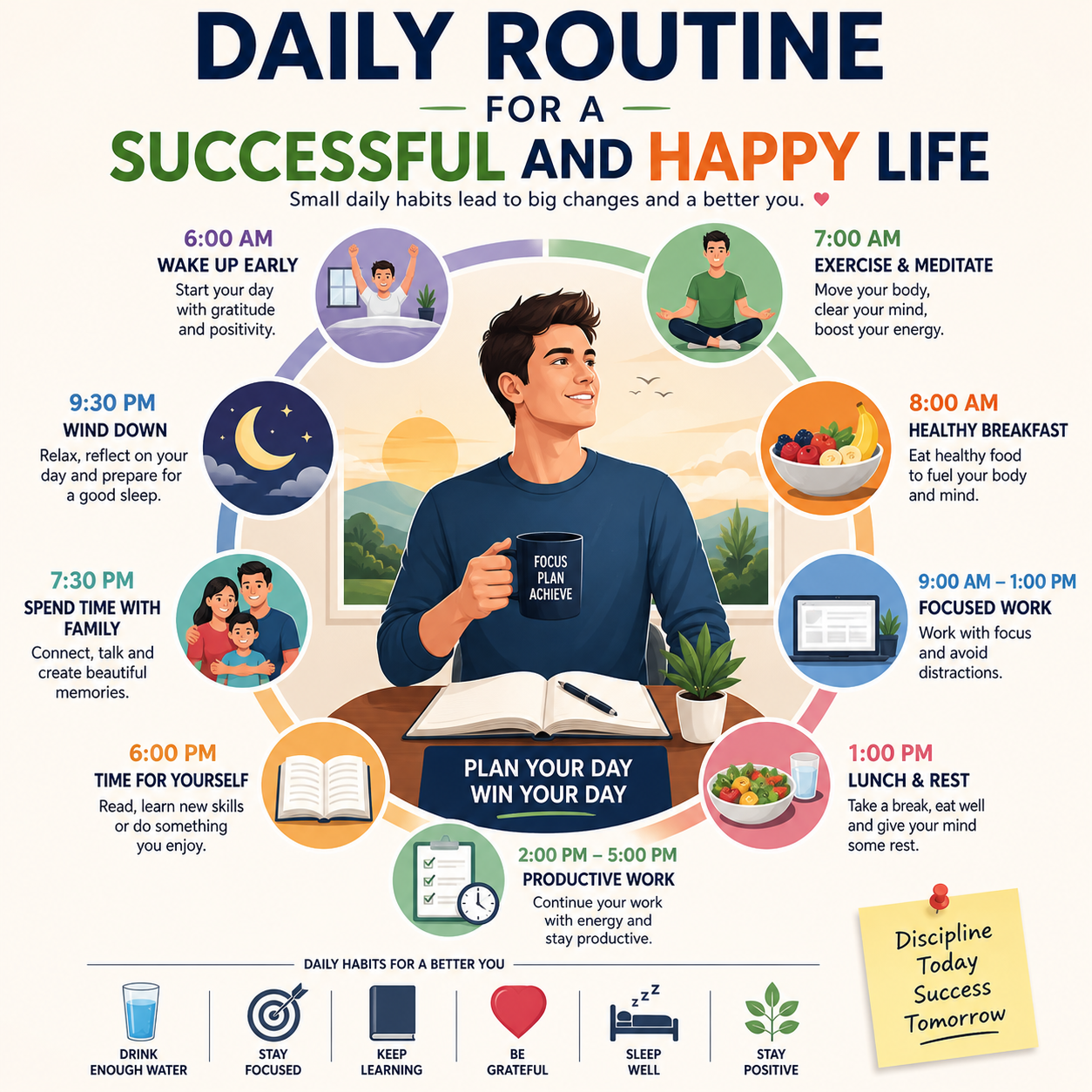
Daily Routine for a Successful and Happy Life
Small daily habits, done consistently, create lasting change
You don’t need a radical life overhaul to feel better and get more done. You just need a solid daily routine — and the patience to stick with it.
Most people underestimate the power of consistency. A few small habits, repeated every day, can improve your focus, your mood, your health, and your sense of purpose. This article walks you through a realistic daily routine that actually works — no hype, no perfection required.
Why Your Daily Routine Matters
Your days are made of habits. From the moment you wake up to the moment you fall asleep, most of what you do follows a pattern. When those patterns are intentional, life feels more controlled and purposeful. When they’re random, it’s easy to feel scattered or stuck.
A good daily routine reduces decision fatigue, keeps your energy steady, and helps you make progress on what actually matters to you. It’s not about rigid scheduling. It’s about building a structure that supports you.
A Realistic Daily Routine That Works
Wake Up at a Consistent Time
Your body runs on an internal clock. Waking up at the same time every day — even on weekends — keeps your energy and mood more stable throughout the day. You don’t need to be up at 5 AM. Just pick a time that works for your life and stick to it.
Drink Water Before Anything Else
Your body loses water overnight. Drinking a glass of water first thing rehydrates you, helps wake up your digestive system, and gives you a gentle, clean start before reaching for coffee or your phone.
Move Your Body Early
You don’t need an intense gym session every morning. A 10-minute walk, light stretching, or a short yoga flow is enough to boost circulation, reduce stress hormones, and sharpen your focus for the hours ahead. Consistency matters far more than intensity here.
Set One to Three Priorities for the Day
Before your day gets busy, write down one to three things you want to accomplish. Not a long to-do list — just the things that matter most. This simple step gives your day a clear direction and makes it much harder to spend hours on low-value tasks.
Do Deep Work When Your Energy Peaks
Most people think and focus best in the mid-morning. Use this window for your most important, demanding tasks — writing, learning, problem-solving, or anything that requires real concentration. Protect this time. Avoid meetings and distractions when possible.
Eat a Proper Lunch and Step Away
Skipping lunch or eating at your desk hurts your focus and mood in the afternoon. Take a real break. Eat something that gives you steady energy — not a sugar spike. Even a 10-minute walk after eating helps prevent the afternoon slump many people experience.
Handle Admin and Lighter Tasks
Most people’s concentration dips in the early afternoon. Use this time for emails, calls, scheduling, or other tasks that don’t require your full mental bandwidth. Save the creative and complex thinking for when your energy is stronger.
Wind Down Deliberately
How you end your day affects how you start the next one. Give yourself a clear wind-down window — at least 30 minutes before bed where you reduce screens, dim the lights, and do something calming. Reading, light stretching, or quiet conversation all work well.
Prioritize Quality Sleep
Sleep is not a luxury — it is the foundation of every other habit on this list. Without enough sleep, your focus, mood, immune function, and decision-making all suffer. Most adults need 7 to 9 hours. Aim for a consistent bedtime, not just a consistent wake time.
The One Habit That Ties It All Together
Reflection. Spending just five minutes at the end of the day asking yourself what went well, what you’d do differently, and what you’re grateful for does something powerful over time. It trains your brain to notice progress rather than just problems.
You don’t need a formal journal. A few lines in a notebook — or even just thinking it through — is enough to build the habit.
Alternative Approaches Worth Exploring
No single routine works for everyone. If the standard structure above doesn’t fit your lifestyle, here are some well-regarded alternatives:
Final Thoughts
A successful and happy life doesn’t come from one big decision. It comes from small, deliberate choices made consistently over time.
You don’t need to follow a perfect routine. You need to follow a reasonable one — and keep returning to it when life gets in the way. That’s the real skill.
Start with two or three habits from this list. Get comfortable with those before adding more. Progress built slowly is progress that lasts.