The Steam Frame: Valve’s Standalone VR Headset
The New Steam Controller: Precision and Flexibility
Design and Features
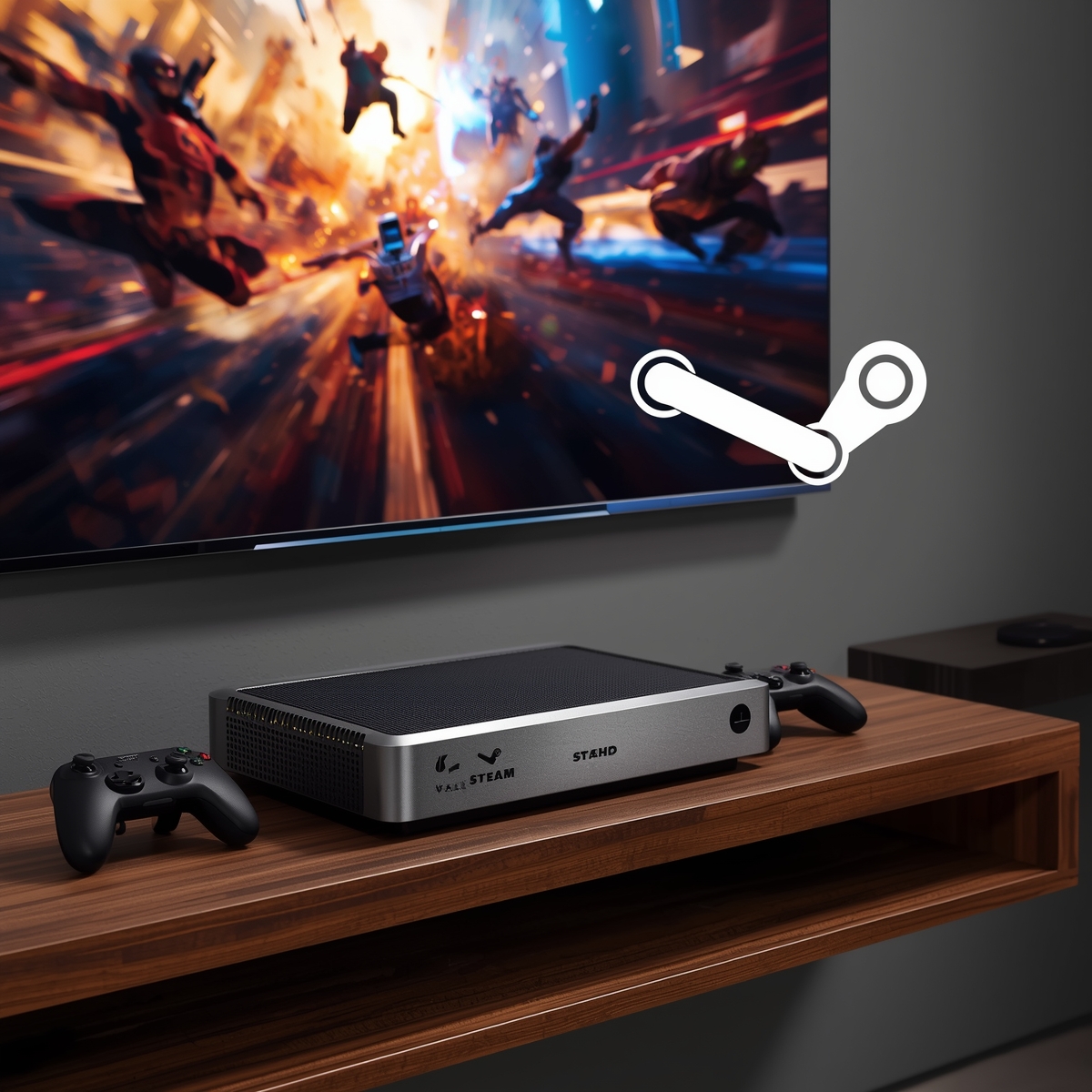
Valve has reignited its vision for living room PC gaming with the announcement of a new Steam Machine, a compact powerhouse designed to bridge the gap between traditional consoles and the expansive world of PC gaming. After the first attempt fizzled out nearly a decade ago, Valve is trying again with a more focused strategy, a mature Steam os, and the proven success of the Steam Deck paving the way. This new device is part of a trio of hardware announcements that also includes a revamped Steam Controller and a standalone VR headset called the Steam Frame
The Steam Machine: Specs, Design, and Performance
Unlike the first generation of Steam Machines, which involved multiple manufacturers and a confusing array of specs, Valve is now producing a single, fixed-spec device. The goal is to offer a unified “console-like” experience that leverages the power of Steam os and its vast game library.
Specifications and Performance Targets at its heart,
the Steam Machine is powered by a semi-custom AMD chips etc, combining a Zen 4 CPU with an rDNA 3 GPU. Valve has stated the device is designed to deliver a 4K gaming experience at 60 frames per second, though this relies on the use of AMD’s FSR upscaling technology to achieve that resolution .The table below breaks down the key specifications:Component Specification CPU Semi-custom AMD Zen 4 (6 cores, 12 threads), up to 4.8 GHz GPU Semi-custom AMD RDNA 3 (28 Compute Units) VRAM 8 GB GDDR6 System RAM 16 GB DDR5 Storage 512 GB or 2 TB NVM e SSD, expandable via micro SD card and user-replaceable M.2 drives (2230/2280) Output Display port 1.4, HDMI 2.0 (with support for HDR and Free sync) OS Steam os Initial hands-on reports suggest the machine is capable. Outlets like IGN noted that Cyberpunk 2077 ran smoothly at 4K with FSR enabled, though more demanding titles like Silent Hill F required settings to be adjusted down from Ultra to maintain performance . This highlights the device’s position as a capable, though not top-tier, gaming PC.A key point of discussion among analysts is the 8 GB of VRAM. Digital Foundry notes that this could be a limiting factor in some modern AAA games, often requiring players to pare back texture quality and avoid ray tracing to maintain performance. Valve has indicated this decision was driven by a focus on “affordability”
.Design and Features
The Steam Machine sports a compact, cube-like design that is often compared to a GameCube. It’s notably smaller than current-generation consoles like the Xbox Series X, making it a discreet addition to any entertainment center .Despite its small size, it features a robust set of ports, including USB-A and USB-C ports, and an internal power supply, so there’s no bulky external power brick .
A clever design feature is the magnetic front panel
, which Valve will allow users to customize, even providing 3D printer files for creating unique faceplates . An LED light bar at the front serves as a customizable status indicator .The New Steam Controller: Precision and Flexibility announced alongside the Steam Machine is a completely redesigned Steam Controller. Learning from the experimental, trackpad-heavy original, this new version adopts a more familiar layout while retaining advanced features.The controller includes all the standard inputs—two thumb sticks, face buttons, D-pad, and triggers—but adds two key features from the Steam Deck: track pads and gyro controls . This offers unparalleled flexibility, allowing players to use traditional controls or mouse-like precision for games that benefit from it.Key improvements include:· TMR (Tunnel Magnetoresistance) Sensor Sticks: These are next-generation Hall effect sensors designed to be highly responsive and virtually eliminate stick drift over time .· Grip Sense: Capacitive sensors on the handles can activate gyro controls only when you’re holding the controller, allowing for easy recentering .· Impressive Battery Life: Valve claims the controller will last over 35 hours on a single charge .· Multiple Connectivity Options: It can connect via Bluetooth, a 2.4GHz wireless puck (included), or a wired USB-C connection .
The Steam Frame: Valve’s Standalone VR Headset
valve is also re-entering the VR market with the Steam Frame, a standalone headset that runs on Steam os. This wireless device is positioned as a self-contained PC, meaning it doesn’t need to be tethered to a powerful computer to function .Early specifications indicate it will be powered by a Qualcomm Snapdragon 8 Gen 3 processor and feature pancake lenses for a slimmer design. With a weight of just 435 grams, it is lighter than some of its main competitors, such as the Samsung Galaxy XR .
Release Date, Price, and Outlook
Valve has stated that all three devices—the Steam Machine, Steam Controller, and Steam Frame—are scheduled to begin shipping in early 2026 . They will be distributed through the same channels as the Steam Deck.The most significant unanswered question is price. Valve has not announced official pricing for any of the devices. Speculation from experts and analysts suggests the Steam Machine could be positioned around the cost of an entry-level gaming PC or current-generation consoles, with estimates ranging from $449 to $599 . The Steam Frame’s price is also unknown, but it is expected to compete in the same space as the Meta Quest 3, though it may be more expensive .Armed with a more mature Steam os and the Proton compatibility layer that has proven so successful on the Steam Deck, the new Steam Machine has a far stronger foundation than its predecessor. For gamers looking for a simple way to access their Steam library on a big screen, or for those seeking an alternative to traditional consoles, Valve’s new hardware ecosystem is shaping up to be a compelling option when it arrives in 2026.