Why Is the Sky Red Tonight?
Northern Lights Tomorrow? What’s Next
How to See the Northern Lights: Step-by-Step Guide
The northern lights—also known as the aurora borealis—have captivated humanity for centuries with their dancing ribbons of green, purple, pink, and red across the night sky. If you’re frantically searching “northern lights tonight near me” or “what time can I see the northern lights tonight,” you’re not alone. As of November 13, 2025, a series of powerful geomagnetic storms has pushed the aurora farther south than usual, making it visible in places like Colorado, Chicago, Minneapolis, Dallas, and even parts of Texas and Ohio. This rare celestial event has everyone from Seattle to New Jersey stepping outside with phones in hand, hoping to catch a glimpse of nature’s greatest light show.In this comprehensive guide, we’ll break down everything you need to know: **when to see the northern lights tonight**, **where they might be visible**, **the best time to look**, **how to check the NOAA aurora forecast**, and **tips for spotting them from your backyard**—whether you’re in New York City, Austin, Phoenix, or Omaha.–
What Causes the Northern Lights? (And Why Tonight Could Be Epic)
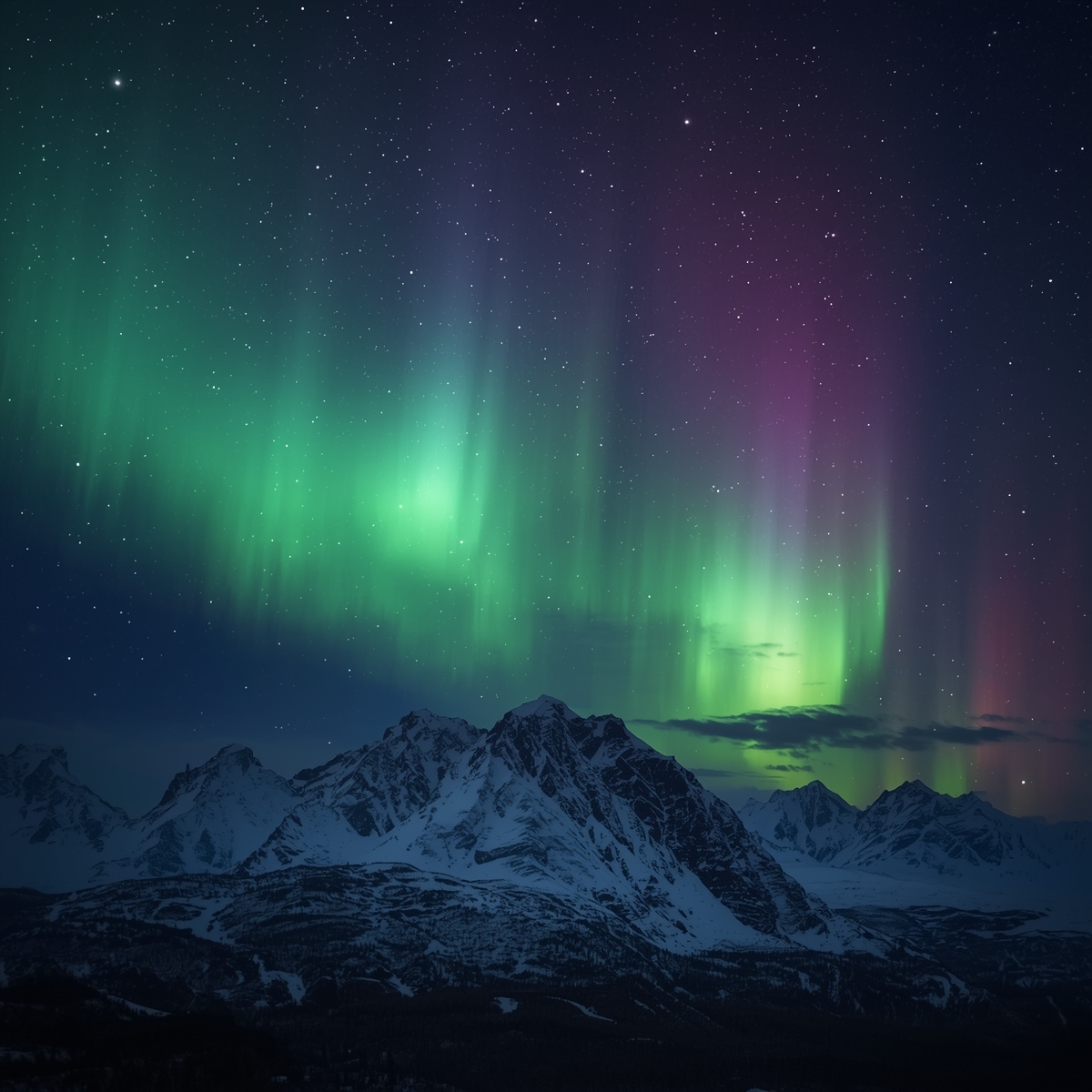
The aurora borealis occurs when charged particles from the sun—carried by solar wind—collide with Earth’s atmosphere. These collisions excite oxygen and nitrogen molecules, which then release energy in the form of colorful light. The stronger the **solar storm** or **coronal mass ejection (CME)**, the brighter and more widespread the aurora becomes.Right now, we’re experiencing the aftermath of a **G4 geomagnetic storm** (on a scale from G1 to G5), triggered by multiple CMEs earlier this week. According to the **NOAA Space Weather Prediction Center**, Kp index levels have spiked to 7–8, meaning the aurora oval has expanded dramatically southward. That’s why people in **Denver, Indianapolis, Kansas City, and even Nashville** are reporting sightings—something that only happens a few times per decade.> **Fun fact**: The red northern lights you’re seeing in photos? That’s high-altitude oxygen glowing above 150 miles up. Green comes from lower altitudes, and purple/pink from nitrogen.—
Will the Northern Lights Be Visible Tonight?
(November 13, 2025)**Short answer: YES — but it depends on your location, cloud cover, and light pollution.**Here’s the current breakdown based on real-time data from **NOAA’s aurora forecast map** and citizen reports on X (formerly Twitter):| **Region** | **Likelihood Tonight** | **Best Viewing Time** ||————————-|————————|—————————–|| Alaska, Canada | Extremely High | 10 PM – 3 AM local || Minnesota, Wisconsin, Michigan | Very High | 9 PM – 2 AM CST || North Dakota, Montana | High | 8 PM – 1 AM MST || Colorado, Iowa, Nebraska| Moderate to High | 9 PM – 1 AM MST/CST || Illinois, Indiana, Ohio | Moderate | 10 PM – 1 AM EST/CST || New York, Pennsylvania | Low to Moderate | 10 PM – 12 AM EST || Texas, Oklahoma, Missouri | Low | 10 PM – 12 AM CST || California, Arizona | Very Low | After midnight (if lucky) |> **Pro tip**: Use the **NOAA 30-minute aurora forecast** (updated every 5 minutes) to see exactly where the oval is expanding in real time.—
What Time Are the Northern Lights Tonight? Best Viewing Window the
**best time to see the northern lights tonight** is generally **between 10 PM and 2 AM local time**, with peak activity often around **midnight**. However, during strong geomagnetic storms like this one, the aurora can appear as early as **8 PM** and last until **dawn**.Here’s a city-by-city breakdown:- **Northern lights tonight Chicago**: Look north from 9:30 PM – 1:30 AM. Head to the lakefront or Indiana Dunes to escape city lights.- **Northern lights tonight Minneapolis**: Prime time 9 PM – 2 AM. Try Lake Superior’s North Shore or rural areas outside the Twin Cities.- **Northern lights Denver / Colorado tonight**: Visible low on the northern horizon from 8:30 PM – 12:30 AM. Drive north of the metro area.- **Northern lights tonight Dallas / Fort Worth**: Very low chance, but if visible, look **due north** after 10 PM from dark rural areas.- **Northern lights tonight NYC / New Jersey**: Faint glow possible 10 PM – midnight. Try upstate or Long Island’s north shore.- **Northern lights Seattle**: High chance! Look north over Puget Sound from 9 PM – 1 AM.**Note**: The aurora moves fast. It can vanish in 10 minutes and reappear an hour later. **Patience is key.**—
Where to See the Northern Lights Tonight
(Even in the Lower 48)You don’t need to fly to Iceland. Here are the **best spots near major U.S. cities**:| **City** | **Top Viewing Spot** ||——————–|———————————————–|| Chicago | Indiana Dunes National Park || Minneapolis | Itasca State Park or Boundary Waters || Denver | Rocky Mountain National Park (north side) || Dallas | Lake Tawakoni State Park (100 mi east) || Seattle | Discovery Park or Hurricane Ridge || Omaha | Platte River State Park || Kansas City | Weston Bend State Park || Philadelphia | Cherry Springs State Park (PA, 4-hour drive) || Boston | Acadia National Park, Maine (weekend trip) |**Light pollution is the enemy.** Use [lightpollutionmap.info](https://www.lightpollutionmap.info) to find dark sky zones near you.—
How to See the Northern Lights: Step-by-Step Guide1.
**Check the forecast** – NOAA Aurora Dashboard: [ovation aurora](https://www.swpc.noaa.gov/products/aurora-30-minute-forecast) – Aurora Alerts apps: *My Aurora Forecast*, *Aurora Notifier*2. **Find dark skies** Avoid cities. Drive at least 30–60 minutes outside urban areas.3. **Look NORTH** The aurora always appears on the **northern horizon** in the U.S. (unless you’re in Alaska).4. **Use your eyes first, then camera** Your eyes adapt to darkness in 20–30 minutes. The aurora often looks **grayish-white** at first, then explodes into color.5. **Camera settings (for phones)** – Night mode (iPhone) or Pro mode (Android) – ISO 800–3200 – Exposure: 10–30 seconds – Use a tripod or stable surface6. **Dress warm & bring snacks** You might be outside for hours.
Northern Lights Tomorrow? What’s Next The current CME is expected to
**weaken by November 14–15**, but another solar eruption is being monitored. There’s a **30% chance of G3–G4 conditions** tomorrow night, meaning **Minnesota, Wisconsin, Michigan, and Montana** could see another show.For long-term planning:- Peak solar activity continues through **2025** (Solar Cycle 25 maximum)- Best months: September–April- Dark, clear, cold nights = best visibility—## Why Is the Sky Red Tonight?If you’re seeing a **red glow in the sky**, it’s likely the **high-altitude aurora** caused by oxygen at 100–200 miles up. This is rare in the lower 48 and only appears during **intense geomagnetic storms** like the one we’re experiencing now.It’s **not** wildfires, city lights, or aliens (sorry).—
Final Tips: Don’t Miss the Aurora Tonight1.
**Set an alarm** for 10 PM local time.2. **Charge your phone** and download a compass app (to face north).3. **Join local aurora Facebook groups** — they post real-time sightings.4. **If you miss it**, don’t worry — another wave could hit this weekend.—The northern lights are unpredictable, fleeting, and utterly magical. Tonight, millions of Americans have a once-in-a-lifetime chance to see them without leaving the country. So step outside, look up, and let the sky remind you how small—and connected—we all are.**Clear skies and happy hunting!***Last updated: November 13, 2025, 8:45 PM ET* *All data sourced from NOAA, Space Weather Live, and real-time X reports.* —